Hop Protocol Monorepo
The Hop Protocol monorepo is an innovative solution designed for developers working within the blockchain and DeFi space. This foundational repository integrates various packages that enhance the development experience, particularly for applications built on the Hop Protocol. It serves as a robust framework for managing both frontend and backend components, streamlining processes for building decentralized applications.
The monorepo comprises a range of libraries and SDKs, which are organized into two main versions—V1 and V2—both catering to different needs within the ecosystem. By consolidating these resources, Hop Protocol provides a cohesive approach for developers, fostering collaboration and ease of use, while also emphasizing efficient workspace management through PNPM.
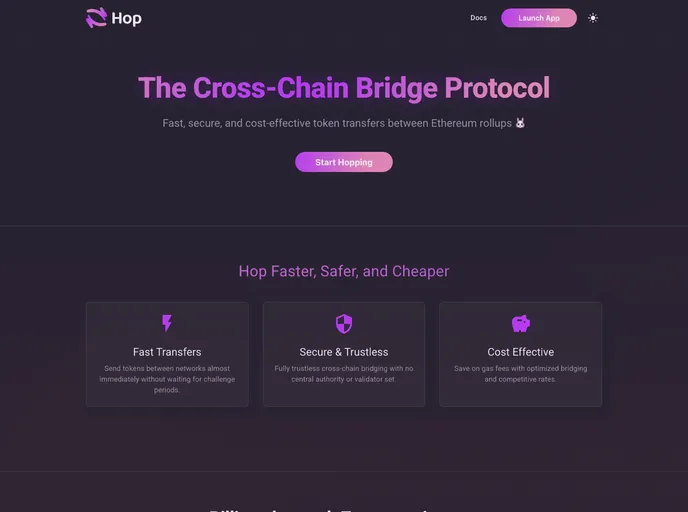
React Frontend UI: The @hop-protocol/frontend package offers a complete React-based user interface, enabling developers to build aesthetically pleasing and functional decentralized applications with ease.
TypeScript SDKs: With both @hop-protocol/sdk for V1 and @hop-protocol/v2-sdk for V2, developers can leverage the strong typing of TypeScript to create robust applications that align with the Hop Protocol’s standards.
TypeScript Hop Nodes: The @hop-protocol/hop-node and @hop-protocol/v2-hop-node packages provide essential backend functionality, allowing seamless interaction with the Ethereum blockchain and other connected networks.
Efficient Package Management: Implementing PNPM for dependency management ensures a faster and more efficient workflow, allowing developers to easily install and manage packages without unnecessary bloat.
Workspace Management: The monorepo structure supports PNPM workspaces, making it possible to handle multiple packages in a consistent manner, ideal for larger projects or teams.
Clear Contribution Guidelines: The repository includes a comprehensive CONTRIBUTING.md file, providing a clear roadmap for developers looking to contribute to the Hop Protocol, thus fostering community engagement and sustainability.
Open-Source License: The project is under the MIT License, encouraging developers to utilize and build upon the existing codebase for personal or commercial applications.

