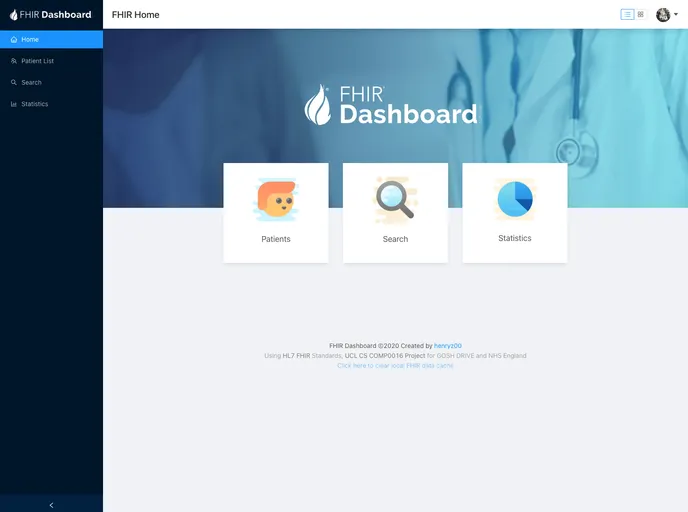
Fully Responsive FHIR Dashboard written using @ReactJS for NHS and GOSH hackathon
Overview
The FHIR Responsive React Dashboard is an impressive project developed during the UCL COMP0016 FHIRworks Hackathon, aimed at enhancing the usability of FHIR datasets for organizations like GOSH DRIVE and NHS England. This dashboard offers intuitive interfaces that are both responsive for web and mobile use, enabling users to easily view, search, and analyze healthcare data. Built with cutting-edge technologies, it combines a sleek design with practical functionalities, making it a valuable tool for healthcare professionals and data analysts alike.
What sets this dashboard apart is its focus on seamless interaction with extensive FHIR data structures while maintaining a user-friendly experience. Users can expect straightforward navigation and powerful search capabilities, making it easier than ever to derive insights from a wealth of healthcare information.
Features
- Responsive Design: Fully adaptable layout that provides a great user experience across devices, including dedicated mobile and desktop navigation systems.
- Patient List Viewer: Offers both table and card layouts for patient data presentation, allowing for easy sorting and detailed observations in a popup format.
- Advanced Search Functionality: Users can create precise search rules using an intuitive interface, supplemented with an exact match function for stricter filtering.
- Data Visualization with Chart.js: Incorporates dynamic charts powered by Chart.js to facilitate clear data analysis, backed by a filter and restructure feature to manipulate raw data.
- Integration with FHIR Standards: Adheres to HL7 FHIR protocols, ensuring compatibility and allowing for extraction and analysis of comprehensive healthcare data sets.
- Customizable User Interface: Built on React and Ant Design, features self-customized CSS and design elements that enhance usability and visual appeal.
- Easy Deployment: The straightforward setup process using Yarn allows for quick running and building of the application, providing flexibility for further development or deployment.